
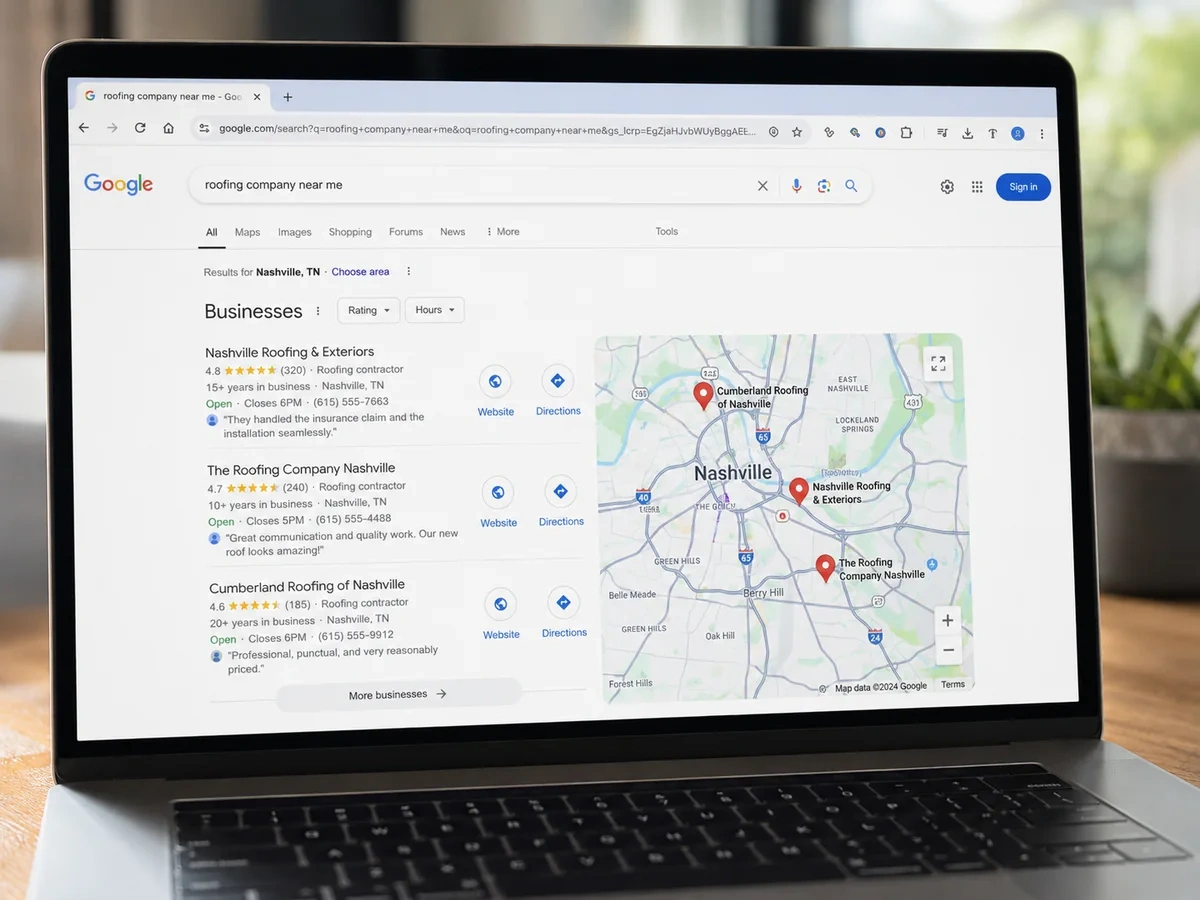
Local SEO can feel confusing.
Business owners are often told to post more, blog more, get more backlinks, add more keywords, or update their Google Business Profile.
Some of that may help.
But for service businesses, local SEO usually starts with a clearer foundation.
Your website needs to explain what you do, where you work, who you help, and why someone should choose you.
Local SEO Is More Than Keywords
Local SEO is not just adding city names to a page.
It includes:
- Clear service pages
- Strong website structure
- Local relevance
- Google Business Profile activity
- Reviews
- Case studies or project pages
- Helpful blog content
- Internal linking
- Technical SEO basics
The goal is to make your business easier for both people and search engines to understand.
1. Build Strong Service Pages
Your website should have clear pages for your core services.
Each service page should explain:
- What the service is
- Who it is for
- What problem it solves
- What is included
- Why your approach is different
- What the next step is
Thin service pages make it harder to rank and harder to convert visitors.
If your service pages are weak, the Website Accelerator can help rebuild the foundation.
2. Show Where You Work
If location matters to your business, your website should make that clear.
This may include:
- Service area sections
- Local pages
- Project pages
- Case studies
- Google Business Profile optimization
- Location-specific blog content
Do not overdo it with low-quality duplicate location pages. Focus on useful pages that help real customers.
3. Use Project Pages and Case Studies
Project pages can help local SEO because they show real work, real services, and real locations.
They also build trust with visitors.
A good project page may include:
- Service performed
- Location or service area
- Problem solved
- Process
- Photos or proof
- Related services
- CTA
See how this kind of structure supports local SEO in the RG Roofing case study.
4. Keep Google Business Profile Active
Your Google Business Profile is an important part of local visibility.
Helpful actions may include:
- Keeping business information accurate
- Adding services
- Posting updates
- Adding photos
- Responding to reviews
- Linking to relevant pages
- Tracking calls and website clicks
5. Publish Content That Supports Services
Blog posts should not be random.
They should support the services and questions your customers actually care about.
Examples:
- Why your website is not generating leads
- How project pages help contractors rank
- Service area pages vs blog posts
- What to fix before running ads
- Website redesign checklist
6. Use Internal Links
Internal links help connect related pages.
For example:
A blog about local SEO should link to your Local SEO service page. A case study should link to related service pages. A service page should link to related blogs and proof.
Internal linking helps visitors and search engines understand what matters on your site.
Local SEO Works Best With a Clear System
Local SEO works better when your website, content, proof, and lead capture are connected.
That is why Local SEO is part of the lead generation layer at MTS.
FAQ
What is local SEO for service businesses?
Local SEO helps service businesses show up for relevant searches in their market or service area.
Do I need location pages?
Maybe. Location pages can help if they are useful and specific. Low-quality duplicate pages are not a strong strategy.
Do case studies help local SEO?
Yes. Case studies and project pages can support local relevance, service relevance, and trust.
Need a Stronger Local SEO Plan?
Marketing & Tech Solutions helps service businesses build clearer website structures, local SEO plans, and content systems.
Improve My Local SEO