
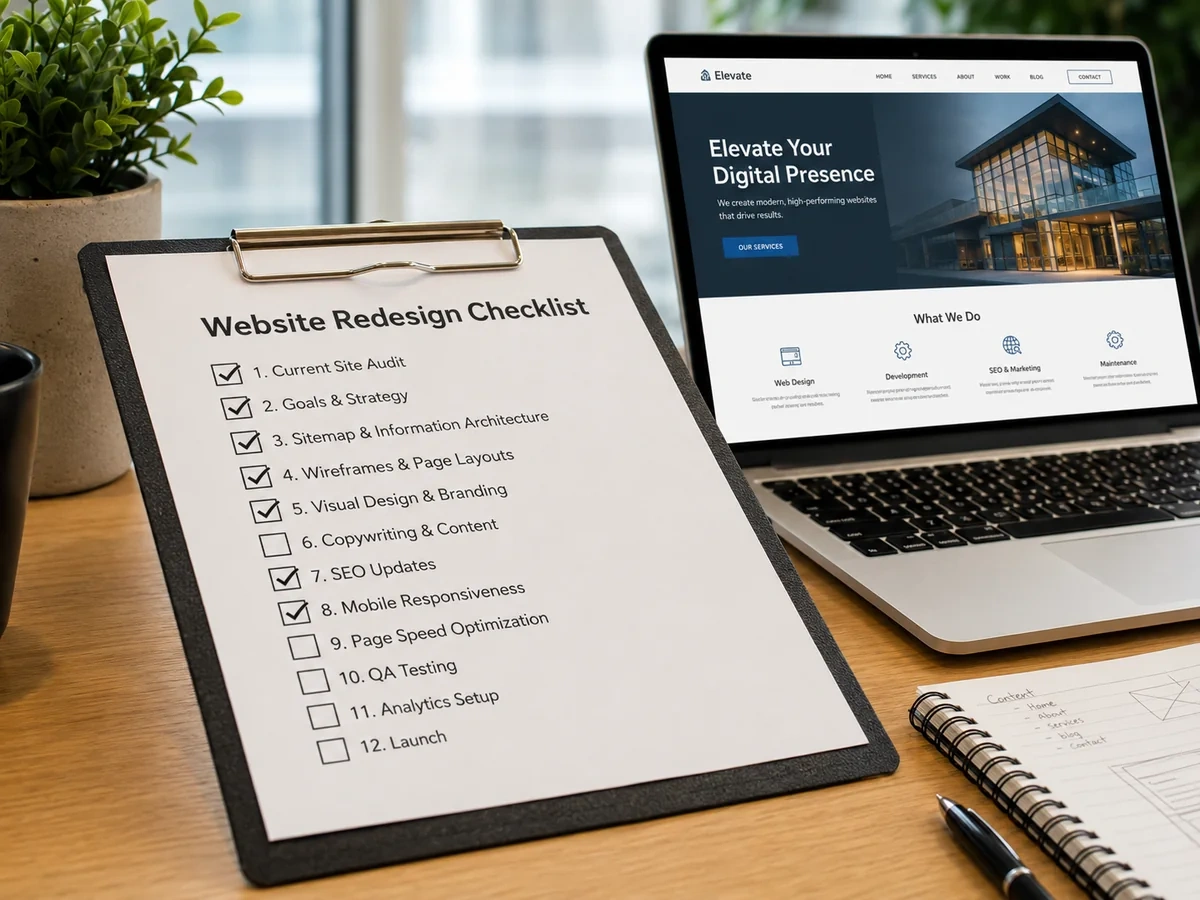
Redesigning your website can be exciting.
It can also be risky if the project focuses only on how the site looks.
A better design is important, but your website also needs to support your business goals.
Before you rebuild, use this checklist to make sure your new site is clear, useful, and built to generate leads.
1. Clarify the Goal of the Website
Before choosing layouts, colors, or pages, get clear on what the website needs to do.
Common goals include:
- Generate quote requests
- Book consultations
- Drive phone calls
- Explain services
- Build trust
- Support local SEO
- Capture leads from ads
- Help prospects understand the process
2. Define Your Ideal Visitor
Your website should be built for the people you actually want to reach.
Ask:
- Who is visiting the site?
- What problem are they trying to solve?
- What questions do they have?
- What would make them trust us?
- What next step should they take?
3. Review What Is Working Now
Before replacing your current site, review what you already have.
Look at:
- Top visited pages
- Current leads or form submissions
- Search traffic
- Blog posts that still get visits
- Service pages that matter
- Backlinks or important URLs
- Pages that should be redirected
- Existing rankings
A redesign should improve the site, not erase useful SEO history.
4. Build a Clear Page Structure
A small business website usually needs more than a homepage and contact page.
Depending on your business, you may need:
- Home
- About
- Services overview
- Individual service pages
- Case studies or project pages
- Testimonials
- Blog or resources
- Contact
- Location or service area pages
The Website Accelerator is designed around this kind of clear, conversion-focused structure.
5. Write Service Pages That Explain the Service
Your service pages should be specific.
A strong service page usually explains:
- What the service is
- Who it is for
- What problem it solves
- What is included
- What makes your approach different
- What the process looks like
- What the next step is
6. Make the Website Mobile-Friendly
Many visitors will view your site on a phone.
Make sure mobile users can easily:
- Read headlines
- Understand the service
- Click buttons
- Submit forms
- Call your business
- Navigate the menu
- View proof or examples
7. Make Calls to Action Clear
Every important page should include a clear next step.
Examples include:
- Request a quote
- Book a consultation
- Schedule an inspection
- Start your project
- Ask a question
- Get a website review
8. Add Trust Builders
A new website should help people feel confident contacting you.
Include:
- Testimonials
- Case studies
- Project examples
- Client logos
- Results
- Clear process explanations
Case studies can also support SEO by showing real examples of your services and outcomes. See how this works in the RG Roofing case study.
9. Plan for SEO Before Launch
SEO should not be an afterthought.
Before launch, make sure you have:
- SEO-friendly page titles
- Meta descriptions
- Clear headings
- Descriptive URLs
- Internal links
- Image alt text
- Sitemap
- Redirects from old URLs
- Local SEO considerations
- Blog or content plan
10. Connect Lead Capture and Follow-Up
The contact form should not be the end of the process.
Make sure you know:
- Where form submissions go
- Who gets notified
- Whether leads enter a CRM
- Whether the prospect gets an instant confirmation
- How follow-up happens
- How leads are tracked
This is where LeadOps can help connect your website to a real follow-up process.
FAQ
What should be included in a website redesign?
A website redesign should include strategy, messaging, page structure, mobile optimization, SEO setup, calls to action, lead capture, and tracking.
Should SEO be part of a website redesign?
Yes. SEO should be considered before launch so important pages, redirects, titles, descriptions, and internal links are handled correctly.
How do I know if I need a website redesign?
You may need a redesign if your site is outdated, slow, confusing, hard to update, or not generating enough leads.
Need Help Planning Your Website Redesign?
Marketing & Tech Solutions builds fast, conversion-focused websites for service-based businesses that need a stronger foundation for lead generation.
Request a Website + Lead System Review